1. Introducere
The Rigol DS2302A is a high-performance digital oscilloscope designed for precise signal analysis and measurement. It features a 300 MHz bandwidth, 2 analog channels, a 2 GSa/s real-time sampling rate, and a deep memory depth of 56 Mpts. This manual provides essential information for setting up, operating, and maintaining your DS2302A oscilloscope.

Figura 1.1: Față view of the Rigol DS2302A Digital Oscilloscope, showing the display, control panel, and input channels.
2. Caracteristici cheie
The DS2302A incorporates several advanced features to enhance measurement capabilities and user experience:
- High Bandwidth and SampRată ling: 300 MHz analog bandwidth and 2 GSa/s real-time sampling rate for capturing fast signals.
- Deep Memory Depth: Up to 56 Mpts memory depth allows for longer waveform captures with high resolution.
- UltraVision Technology: Features like multi-level intensity grading display (up to 256 levels) and real-time ceaseless waveform recording, playback, and analysis functions.
- Advanced Triggering: Supports various trigger types including Edge, Pulse, Runt, Windows, Nth Edge, Slope, Video, Pattern, Delay, Timeout, Duration, Setup/Hold, RS232, I2C, SPI, and CAN.
- Serial Bus Decoding: Built-in decoding functions for common serial protocols such as Parallel, RS232, I2C, SPI, and CAN.
- Display mare: An 8-inch display provides clear viewing of waveforms and measurement data.
- Built-in 50Ω Adapters: Improves signal integrity for higher speed signals.
Videoclipul 2.1: Terminatview of the Rigol DS2000 Series Digital Oscilloscopes, highlighting key features such as large display, high sampling rate, deep memory, and advanced triggering and decoding capabilities.

Figure 2.1: The oscilloscope display demonstrating its wide vertical range (500 µV/div to 10 V/div) and low noise floor, which is beneficial for capturing small signals accurately.

Figure 2.2: Illustration of the UltraVision deep memory feature, allowing for up to 56 Mpts of memory depth on analog channels for extended waveform capture.
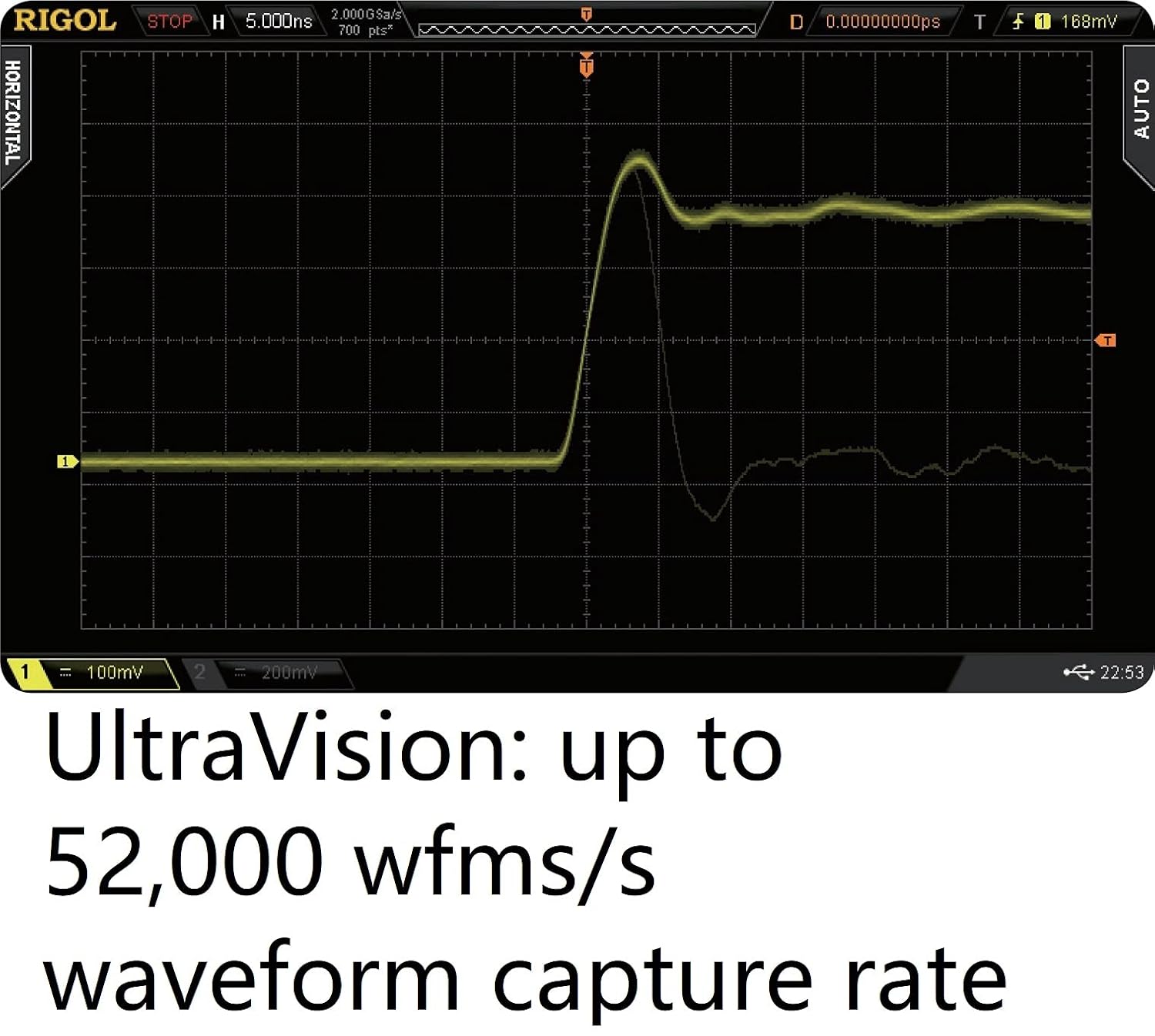
Figure 2.3: The oscilloscope's display showcasing the UltraVision technology's high waveform capture rate of up to 52,000 waveforms per second, enabling the observation of transient events.
3. Configurare
Follow these steps to set up your Rigol DS2302A oscilloscope:
- Despachetarea: Carefully remove the oscilloscope and all accessories from its packaging. Inspect for any signs of damage.
- Conexiune de alimentare: Connect the provided power cable to the power input on the rear panel of the oscilloscope and then to a suitable AC power outlet.
- Pornire inițială: Press the power button on the front panel to turn on the oscilloscope. Allow a few moments for the system to boot up.
- Conexiunea sondei: Connect the oscilloscope probes to the BNC input connectors (CH1, CH2) on the front panel. Ensure a secure connection.
- Împământare: Always ensure the oscilloscope is properly grounded to prevent electrical shock and ensure accurate measurements.

Figure 3.1: The packaging box for the Rigol DS2302A oscilloscope, indicating proper handling and recycling symbols.
4. Instrucțiuni de utilizare
This section covers basic operation and common functions of the DS2302A oscilloscope.
4.1. Basic Waveform Display
- Controale verticale: Use the vertical position and scale knobs for each channel (CH1, CH2) to adjust the vertical position and voltage pe diviziune a formei de undă.
- Controale orizontale: Use the horizontal position and scale knobs to adjust the time base and horizontal position of the waveform.
- Buton automat: Apăsați tasta AUTO button for automatic setup of vertical, horizontal, and trigger systems to display a stable waveform.
4.2. Trigger Functions
The oscilloscope offers various trigger modes to stabilize and capture specific events.
- Edge Trigger: Triggers on the rising or falling edge of a signal.
- Pulse Trigger: Triggers on pulses of specific width or polarity.
- Serial Bus Triggering: Utilize dedicated trigger types for serial protocols like I2C, SPI, and CAN to isolate specific data packets or events.

Figure 4.1: The oscilloscope's trigger menu, illustrating the wide array of trigger functions available, including Runt, Setup/Hold, and Nth Edge, for precise signal capture.
4.3. Serial Bus Decoding
The DS2302A can decode and display data from various serial buses.
- Accessing Decode: Navigați la Decodați menu to select the desired protocol (e.g., RS232, I2C, SPI, CAN).
- Configurare: Configure the bus parameters such as clock source, data lines, and bit rates as required by your specific bus.
- Viewing Decoded Data: The decoded data will be displayed on the screen, often in a tabular or packet-based format, alongside the analog waveforms.

Figure 4.2: The oscilloscope's display demonstrating its serial bus trigger and decoding functions for protocols like RS232, I2C, SPI, and CAN, showing both the analog signal and the decoded data.
4.4. Waveform Recording and Analysis
Utilize the UltraVision features for in-depth waveform analysis.
- Înregistrare: Access the recording function to capture long durations of waveform data into the deep memory.
- Redare: Review recorded waveforms frame by frame or continuously to identify anomalies.
- Analiză: Apply various measurement and analysis tools to the recorded data for detailed characterization.

Figure 4.3: The oscilloscope's display showcasing UltraVision's real-time ceaseless waveform recording, playback, and analysis functions, allowing users to capture and examine transient events.
5. Întreținere
Proper maintenance ensures the longevity and accuracy of your oscilloscope.
- curatenie: Use a soft, dry cloth to clean the exterior of the instrument. For stubborn dirt, a slightly damp cloth with mild detergent may be used. Avoid abrasive cleaners or solvents.
- Ventilare: Ensure the ventilation openings on the instrument are clear and unobstructed to prevent overheating.
- Depozitare: When not in use, store the oscilloscope in a clean, dry environment away from direct sunlight and extreme temperatures.
- Îngrijirea sondei: Handle oscilloscope probes with care. Avoid bending or stressing the probe tips. Store them properly to prevent damage.
6. Depanare
This section addresses common issues you might encounter with your DS2302A oscilloscope.
| Problemă | Cauza posibila | Soluţie |
|---|---|---|
| Fără afișaj după pornire | Power cable not connected; Power switch off; Fuse blown | Check power cable connection; Ensure power switch is ON; Replace fuse (refer to back panel for fuse specifications). |
| Nu este afișată nicio formă de undă | Probe not connected; Input signal too small/large; Incorrect trigger settings | Connect probe securely; Adjust vertical scale (Volts/Div); Press AUTO button or adjust trigger level/mode. |
| Formă de undă instabilă | Incorrect trigger source/mode/level; Signal noise | Verify trigger settings; Adjust trigger level; Use averaging acquisition mode to reduce noise. |
7. Specificații
Detailed technical specifications for the Rigol DS2302A Digital Oscilloscope:
| Caracteristică | Caietul de sarcini |
|---|---|
| Lățimea de bandă analogică | 300 MHz |
| Numărul de canale analogice | 2 |
| Max. Real-time Sample Rate | 2 GSa/s (single channel), 1 GSa/s (dual channel) |
| Max. Memory Depth | 56 Mpts (single channel), 28 Mpts (dual channel) |
| Max. Waveform Capture Rate | 50,000 wfms/s |
| Dimensiunile produsului | 14.17 x 7.09 x 5.12 inci |
| Greutatea articolului | 8.36 lire sterline |
| Producător | POARTĂ |
| Numărul de model al articolului | DS2302A |
8. Garanție și asistență
For warranty information, technical support, or any further inquiries regarding your Rigol DS2302A Digital Oscilloscope, please contact Rigol directly.
You can also visit the official Rigol North America website for more details and resources: www.rigolna.com


