
1. Produs terminatview
This manual provides detailed instructions for the HZTWFC Crankshaft Position Sensor, model 96183235. This sensor is a critical component in your vehicle's engine management system, responsible for monitoring the rotational speed and position of the crankshaft. This information is vital for the Engine Control Unit (ECU) to accurately determine ignition timing and fuel injection.
The sensor is designed as a direct replacement for original equipment manufacturer (OEM) parts with interchange numbers 96183235, 89932001, SEB966, and SS10895.
Compatibilitate:
- For Daewoo Lanos KLAT 1.4 (1997/05-2015/12, 1349 ccm, 55 KW, 75 PS)
- For Daewoo Lanos KLAT 1.5 (1997/05-2015/12, 1498 ccm, 63 KW, 86 PS)
- For Daewoo Lanos KLAT 1.6 16V (1997/05-2015/12, 1598 ccm, 78 KW, 106 PS)
- For Daewoo Lanos Stufenheck KLAT 1.4 (1997/05-2015/12, 1349 ccm, 55 KW, 75 PS)
- For Daewoo Lanos Stufenheck KLAT 1.5 (1997/05-2015/12, 1498 ccm, 63 KW, 86 PS)
- For Daewoo Lanos Stufenheck KLAT 1.6 16V (1997/05-2015/12, 1598 ccm, 78 KW, 106 PS)
- For Daewoo Nubira KLAJ 1.6 16V (1997/05-2015/12, 1598 ccm, 78 KW, 106 PS)
- For Daewoo Nubira Stufenheck KLAJ 1.6 16V (2000/07-2015/12, 1598 ccm, 76 KW, 103 PS)
- For Daewoo Nubira Stufenheck KLAJ 1.6 16V (1997/05-2015/12, 1598 ccm, 78 KW, 106 PS)
- For Daewoo Nubira Wagon KLAJ 1.6 16V (2000/12-2015/12, 1598 ccm, 76 KW, 103 PS)
- For Daewoo Nubira Wagon KLAJ 1.6 16V (1997/05-2015/12, 1598 ccm, 78 KW, 106 PS)
2. Informații de siguranță
Always prioritize safety when working on any vehicle. Failure to follow these safety guidelines may result in personal injury or damage to the vehicle.
- Deconectați bateria: Before beginning any electrical work or component replacement, disconnect the vehicle's negative battery terminal to prevent accidental electrical shorts or component damage.
- Purtați echipament de protecție: Purtați întotdeauna echipament individual de protecție adecvat, inclusiv ochelari de protecție și mănuși.
- Asistență pentru vehicule: Ensure the vehicle is securely supported on jack stands if lifted. Never rely solely on a jack.
- Suprafețe fierbinți: Engine components can be extremely hot. Allow the engine to cool down before working on it.
- Scurgeri de fluide: Be aware of potential fluid leaks (oil, coolant, fuel) and take appropriate precautions.
- Asistență profesională: Dacă nu sunteți sigur de vreo etapă a procesului de instalare, consultați un tehnician auto calificat.
3. Conținutul pachetului
Verificați dacă toate componentele sunt prezente și nedeteriorate la deschiderea ambalajului.
- 1 x HZTWFC Crankshaft Position Sensor (Model 96183235)
- Note: Additional mounting hardware or gaskets are typically not included with the sensor itself and may need to be purchased separately if required for your specific vehicle application.

Imaginea 1: HZTWFC Crankshaft Position Sensor 96183235. This image shows the complete sensor unit with its integrated wiring and connector.
4. Caracteristicile produsului
- OEM Standard Compliance: Manufactured to meet or exceed OEM specifications for fit, form, and function.
- Materiale de înaltă calitate: Constructed from durable materials for reliable performance and extended service life.
- Precise Signal Output: Designed to provide accurate crankshaft position and speed data to the ECU.
- Înlocuire directă: Engineered for a straightforward installation, matching original part numbers 96183235, 89932001, SEB966, SS10895.

Imaginea 2: A închide view of the sensor's main body and mounting point. This image highlights the robust construction and precise design of the sensor.
5. Configurare și instalare
Installation of a crankshaft position sensor typically requires basic automotive tools and mechanical knowledge. Refer to your vehicle's specific service manual for detailed instructions and torque specifications. The following are general steps:
- Preparare: Park the vehicle on a level surface, engage the parking brake, and allow the engine to cool completely. Disconnect the negative terminal of the battery.
- Localizați senzorul: Identify the location of the existing crankshaft position sensor. This can vary significantly by vehicle model and engine configuration. Common locations include near the crankshaft pulley, on the engine block, or near the transmission bell housing.
- Deconectați cablarea: Deconectați cu grijă conectorul electric de la senzorul vechi.
- Scoateți senzorul vechi: Use the appropriate wrench or socket to remove the bolt(s) securing the old sensor. Gently pull the sensor out of its mounting bore. Be prepared for a small amount of oil or fluid to escape.
- Inspectați zona de montare: Clean the sensor mounting bore and ensure there are no debris or old O-ring remnants.
- Instalați senzorul nou: Apply a thin layer of clean engine oil to the O-ring of the new HZTWFC sensor (if applicable). Carefully insert the new sensor into the mounting bore. Ensure it seats properly.
- Senzor securizat: Install and tighten the retaining bolt(s) to the manufacturer's specified torque. Overtightening can damage the sensor or engine block.
- Conectare cablare: Reconectați conectorul electric la noul senzor, asigurându-vă că se fixează în poziție cu un clic.
- Pasi finali: Reconnect the negative battery terminal. Start the engine and check for proper operation and any diagnostic trouble codes (DTCs). Clear any stored codes using an OBD-II scanner if necessary.
Important: Always consult a professional mechanic or your vehicle's specific service manual for precise installation procedures.
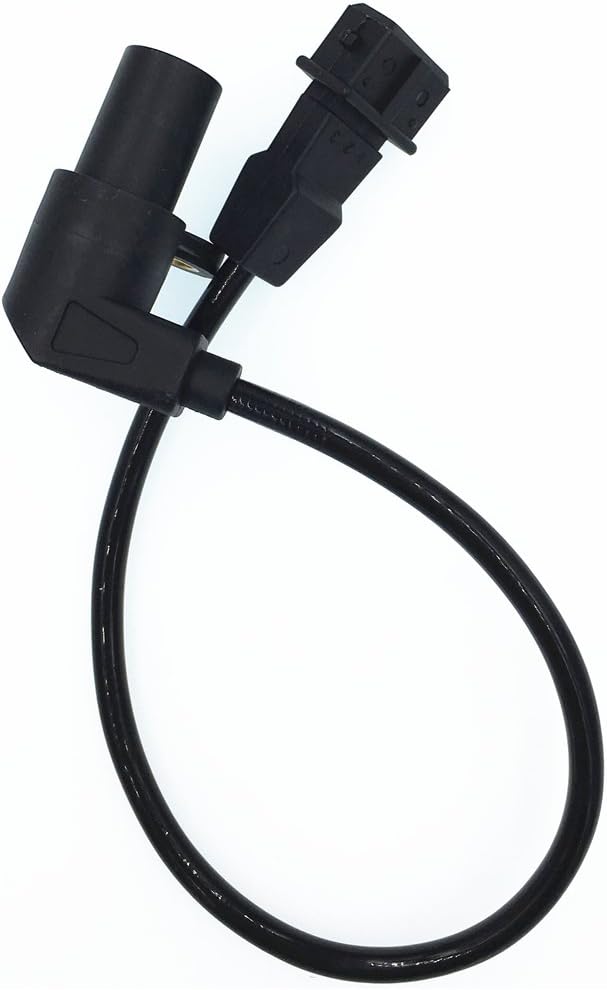
Imaginea 3: View of the sensor showing the integrated wiring and electrical connector. This illustrates the connection point for the vehicle's wiring harness.
6. Funcționare
The crankshaft position sensor is a passive component that generates an electrical signal based on the rotation of the crankshaft. As the crankshaft rotates, a reluctor wheel (or tone ring) with teeth passes by the sensor. The sensor detects these teeth, creating a series of pulses. The ECU interprets these pulses to determine:
- Engine Speed (RPM): By measuring the frequency of the pulses.
- Crankshaft Position: By identifying specific gaps or patterns in the teeth, which correspond to the position of the pistons.
This information is crucial for the ECU to precisely control fuel injection timing, ignition timing, and other engine functions, ensuring optimal engine performance, fuel efficiency, and emissions control.
7. Întreținere
Crankshaft position sensors are generally maintenance-free components. However, regular vehicle maintenance practices can help ensure their longevity and proper function:
- Inspecții regulate: During routine vehicle inspections, visually check the sensor and its wiring for any signs of damage, corrosion, or loose connections.
- Curăţenie: Keep the engine bay clean to prevent excessive dirt and debris buildup around sensors, which could potentially interfere with their operation or cause damage to wiring.
- Evitați substanțele chimice dure: When cleaning the engine, avoid spraying harsh chemicals directly onto electrical components and connectors.
8. Depanare
A faulty crankshaft position sensor can cause various engine performance issues. Common symptoms include:
- Motorul se rotește brusc, dar nu pornește: If the ECU doesn't receive a crankshaft signal, it won't know when to fire the spark plugs or inject fuel.
- Intermittent Stalling: The engine may suddenly lose power or stall while driving.
- Ralanti neregulat sau rateuri de aprindere: Incorrect timing information can lead to erratic engine operation.
- Martorul luminos de verificare a motorului (CEL): The ECU will typically illuminate the CEL and store a diagnostic trouble code (DTC) related to the crankshaft position sensor (e.g., P0335).
- Economie redusă de combustibil: Inaccurate timing can lead to inefficient combustion.
Pași de depanare:
- Check for DTCs: Use an OBD-II scanner to retrieve any stored trouble codes. This is the first and most important step.
- Inspectați cablajul și conectorul: Visually check the sensor's wiring harness and connector for any signs of damage, fraying, corrosion, or loose connections.
- Sensor Resistance Test: If accessible, a multimeter can be used to check the sensor's resistance (refer to vehicle-specific specifications).
- Diagnostic profesional: If symptoms persist after basic checks, professional diagnosis using specialized diagnostic tools (e.g., oscilloscope to check sensor waveform) is recommended.

Imaginea 4: Detaliat view of the electrical connector pins. This shows the contact points for the vehicle's wiring, which should be clean and free of corrosion for proper signal transmission.
9. Specificații
| Atribut | Valoare |
|---|---|
| Marca | HZTWFC |
| Numărul de model | 96183235 |
| Numerele piese OEM | 96183235, 89932001, SEB966, SS10895 |
| Tip de montare | Montare cu flanșă |
| Tip ieșire | Push-Pull |
| Utilizări specifice | Automobile |
| Greutatea articolului | 7.1 uncii |
| Dimensiuni pachet | 5.91 x 3.94 x 3.94 inci |
| UPC | 704529321386 |
10. Garanție și asistență
Garantie:
The HZTWFC Crankshaft Position Sensor comes with a 1 ani garanție from the date of purchase. This warranty covers manufacturing defects and ensures a worry-free shopping experience. Please retain your proof of purchase for warranty claims.
Sprijin:
For technical assistance, troubleshooting, or warranty inquiries, please contact HZTWFC customer support. When contacting support, please have your product model number (96183235) and purchase details readily available.
Note: Always verify compatibility with your vehicle's year, make, and model before purchasing. Ensure the part number matches your existing component.